
The first weeks after giving birth bring a kind of tired that no amount of sleep seems to fix. Your body has just done something extraordinary, and now it’s adjusting to a completely different rhythm. Sore back. Tight shoulders from feeding. Aching hips. Hormones in flux. A baby who needs you around the clock. Self-care often falls to the bottom of the list at exactly the moment you need it most.
Postpartum massage is built for this window. It’s a focused form of bodywork designed to help new mothers recover physically, settle hormonally, and find a few moments where the focus is finally on them. In Lancaster, PA, more women are booking these sessions in the weeks and months after delivery, and the benefits often go far beyond muscle relief.
This guide covers what postpartum massage is, when it’s safe to start, what to expect from a session, and how it fits into the bigger picture of recovery after birth.
What Is Postpartum Massage?
Postpartum massage is bodywork built specifically for women in the recovery period after childbirth. It addresses the physical demands of pregnancy and labor, the hormonal shifts that follow delivery, and the new strain that comes from feeding, lifting, and carrying a newborn.
A postpartum session looks different from a regular massage. The pressure adapts to what your body is ready for. The positioning works around healing tissues, sore breasts, and tender abdomens. The focus shifts to the muscles and joints that take the biggest hit in the first months after birth.
It’s not a luxury session. It’s recovery work, the same way an athlete books bodywork after a major competition.
How Postpartum Bodywork Differs from Prenatal Massage
Prenatal massage focuses on supporting the body during pregnancy, easing back pain, reducing swelling, and helping mothers sleep through changing hormones and body shape. The work happens in side-lying or semi-reclined positions to keep the baby safe and comfortable.
Postpartum massage takes a different approach. The body is no longer carrying the baby externally, so positioning opens up. The therapist can work prone (face down) again, sometimes with extra cushioning if the breasts are tender or engorged. The pressure can go deeper as muscles tolerate it. The focus also expands. Now the work covers not just the lingering effects of pregnancy but also new strain from feeding postures, lifting, and broken sleep.
For women still in the prenatal phase or planning ahead, the prenatal massage guide covers what to expect during pregnancy.
When Can You Start Postpartum Massage?
Timing depends on the type of birth and how recovery is going.
After Vaginal Birth
Most women can start gentle postpartum massage within one to two weeks after delivery, as long as recovery is going smoothly. Some therapists prefer to wait until after the six-week postpartum checkup for deeper work. Light, gentle bodywork focused on the upper back, neck, and shoulders is usually safe earlier.
After C-Section
C-section recovery requires more time. Most therapists wait at least six to eight weeks before working near the incision area. Upper body work can usually start sooner, around two to three weeks postpartum, with doctor clearance. Once the scar has healed, scar tissue work can begin to break up adhesions and improve mobility around the incision.
Special Circumstances
If you experienced complications, a difficult birth, or postpartum bleeding that lasted longer than expected, talk to your doctor before scheduling. Conditions like postpartum preeclampsia, infection, or significant tearing all need clearance before bodywork begins.
Benefits of Postpartum Massage
The benefits stack up quickly for new moms who make space for regular sessions.
Speeds Physical Recovery
The body has a lot to heal in the weeks after birth. Stretched ligaments, sore muscles, internal organs settling back into place, and tissue repair all happen at once. Massage improves circulation to these areas, which delivers nutrients and clears waste faster. Most clients notice less soreness and quicker bounce-back from daily strain.
Reduces Postpartum Swelling
Many women hold extra fluid for weeks after delivery, especially in the legs, hands, and feet. Lymphatic drainage techniques applied during a postpartum session help the body shed that retention faster. For more on how this style of work supports recovery, see the lymphatic drainage massage guide.
Eases Back, Neck and Shoulder Pain
Feeding a baby for hours each day puts the upper back, shoulders, and neck under constant strain. If you’re nursing or bottle-feeding, the hunched posture and repetitive holding pattern build tension fast. Postpartum massage releases these areas before the pain becomes chronic.
Supports Breastfeeding Comfort
For nursing mothers, gentle work around the chest, upper back, and shoulders can ease the tightness that comes with engorgement, blocked ducts, and feeding posture. Some therapists also offer specific techniques to help with milk flow and prevent mastitis when worked on early.
Balances Hormones and Reduces Mood Swings
The hormonal shift after delivery is enormous. Estrogen and progesterone drop sharply, while prolactin and oxytocin rise. Massage helps regulate cortisol levels, supports oxytocin release, and gives the nervous system a chance to settle. Many new moms report a clearer head and more even mood after even one session.
Helps with Diastasis Recti and Core Recovery
Diastasis recti, the separation of the abdominal muscles during pregnancy, affects most postpartum women to some degree. While massage alone can’t close the gap, gentle abdominal work supports the surrounding muscles, eases the tension that pulls on the linea alba, and pairs well with the rebuilding exercises a physical therapist or trainer prescribes.
Improves Sleep Quality
Sleep deprivation is the part of new motherhood no one truly prepares you for. Massage activates the parasympathetic nervous system and improves the quality of the sleep you do get. Many clients report falling asleep faster and waking less often during fussy nights. For more on how bodywork supports rest, see how therapeutic massage helps with insomnia and sleep.
What to Expect During a Postpartum Session
A postpartum session usually runs 60 or 90 minutes, depending on what you’re working on and how much time you have away from the baby.
The therapist will start with an intake covering your delivery, recovery so far, current pain points, breastfeeding status, and any concerns. From there, the work moves at your pace.
You can expect:
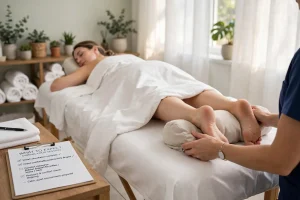
- Choice of positioning (face down, side-lying, or semi-reclined) based on what feels best
- Bolstering and pillows to support sore breasts, healing incisions, or tender areas
- Pressure that adapts to your tolerance from session to session
- Focus on whatever is hurting most that day, which may shift week to week
- Gentle abdominal work, scar tissue release, or lymphatic drainage as needed
- Quiet space to rest, with no pressure to chat or perform
If you’re still nursing, plan to feed the baby right before the session if possible. Some clinics also accommodate nursing during or after the appointment if that works better.
Common Areas of Focus
A postpartum session targets the spots most affected by pregnancy, labor, and the early days of caring for a newborn.
Lower Back and Hips
The lower back carries much of the load during pregnancy, and labor itself stresses the hips and pelvis. Releasing tight hip flexors, the QL muscles, and the lower back muscles brings significant relief.
Upper Back, Neck and Shoulders
Almost every new mom carries tension here. Rounded shoulders from feeding, neck strain from looking down, and tight upper traps from carrying the baby all show up in this region.
Abdomen
Once cleared by your doctor, gentle abdominal work helps the uterus return to its pre-pregnancy size, supports diastasis recovery, and breaks up adhesions from C-section scarring.
Legs and Feet
Swelling, leg cramps, and fluid retention all respond well to circulatory work in the legs. Foot reflexology can also be added for deeper relaxation and hormonal support.
Chest and Breast Area
For nursing mothers, gentle work around the upper chest and shoulders eases the tightness that builds with engorgement and feeding postures. The breast tissue itself is not directly massaged unless requested for specific issues like blocked ducts.
Postpartum Massage and the Mental Side of Motherhood
Recovery isn’t only physical. The first months after birth are emotionally enormous. Identity shifts. Sleep disappears. Anxiety can spike. Many new moms describe feeling disconnected from their bodies after pregnancy and birth.
Bodywork creates space to reconnect. The act of being touched with care, in a setting where the focus is entirely on you, has a settling effect that’s hard to put into words. For mothers experiencing postpartum anxiety, regular sessions can be a helpful piece of a wider support plan that includes a doctor, therapist, and family.
For mothers whose birth experience was traumatic, somatic massage techniques can offer a gentle way to process what the body is still holding. Postpartum massage is not a substitute for mental health care, but it works well alongside it.
If anxiety is a major piece of what you’re carrying, vagus nerve work pairs well with postpartum sessions to calm the nervous system more deeply.
How Often Should New Moms Book Sessions?
Frequency depends on how your recovery is going and how much time you can carve out. A general guide:
- Weeks 1 to 6: Light sessions every one to two weeks if cleared, focused on upper body and gentle whole-body work.
- Weeks 6 to 12: Weekly or bi-weekly sessions as deeper work becomes possible.
- Months 3 to 6: Bi-weekly or monthly sessions for ongoing recovery and stress relief.
- Beyond 6 months: Monthly maintenance, with extra sessions during teething, returning to work, or sleep regressions.
For more on building a schedule that holds up over time, see how often you should get a massage.
At-Home Self-Care Between Sessions
A few habits keep the gains from your sessions from disappearing:
- Hydrate. Water supports tissue repair and milk supply if nursing.
- Move gently. Short walks help circulation and mood.
- Watch your feeding posture. Use pillows to bring the baby to you, not the other way around.
- Breathe slowly when feeding. It calms the nervous system and improves milk letdown.
- Stretch shoulders and neck a few times a day to release feeding tension.
- Apply warm compresses to sore breasts before nursing if engorged.
- Ask for help. Recovery happens faster when you’re not also doing all the cleaning, cooking, and laundry.
When to Skip a Session
Postpartum massage is safe for most women, but skip or postpone a session if you have:
- Active fever or infection
- Heavy postpartum bleeding outside of normal patterns
- An incision that hasn’t fully closed
- Recently diagnosed blood clots
- Mastitis with fever
- Doctor concerns about your recovery progress
Always check with your provider if you’re unsure, and let your therapist know about any medications, conditions, or concerns before the session begins.
Booking Postpartum Massage in Lancaster, PA
The early months of motherhood are some of the most demanding any body goes through. Recovery doesn’t happen in a vacuum. It needs rest, nutrition, support from people around you, and care for the body that just did the hardest work of its life.
Postpartum massage gives new moms a space where the focus, for an hour or two, is entirely on them. The benefits ripple out, into deeper sleep, lower stress, less pain, and more presence with the baby and the rest of life.
To browse session options or ask about postpartum care, see the full list of massage services in Lancaster, or read more about how the body responds to bodywork during this window in the prenatal massage safety guide.
Looking for relief in Lancaster? See how our prenatal massage in Lancaster, PA can help, then schedule your session online or call (717) 725-9670.