
Somatic massage is not something most people have heard of until they need it. It doesn’t get the same mainstream attention as deep tissue or Swedish massage, but for people who carry trauma in their bodies, it’s often the most effective form of bodywork available.
If you’ve been in therapy, worked through your experiences on a cognitive level, and still feel like something is stuck, somatic massage might be the piece you’re missing. Lancaster therapists who specialize in this work are seeing more clients come in with exactly that situation, and the results have been meaningful.
What Somatic Actually Means
The word somatic comes from the Greek word for body. Somatic massage is built on the knowledge that the body holds onto experiences, particularly stressful or traumatic ones, in ways that talk therapy alone doesn’t always reach.
When you go through something overwhelming, your nervous system responds. Muscles tighten. Your breathing changes. Certain areas of the body brace against the experience. In many cases, once the event is over, the nervous system processes what happened and the body returns to normal. But when the experience is severe enough, or when there’s no opportunity to complete that processing, the tension and activation can stay in the body long after the event is over.
This is what people mean when they say trauma lives in the body. It’s not a figure of speech. It’s a real physiological pattern.
How Somatic Massage Is Different
Standard massage approaches focus primarily on muscle tissue. They work on tension, circulation, and the structural aspects of how the body moves. That work is valuable and it helps a lot of people. But somatic massage takes a different approach.
Somatic work is slower and more attentive. The therapist is paying close attention not just to the muscles but to how your nervous system is responding during the session. They’re watching for signs of activation or shutdown, and they’re working at a pace that allows the body to process rather than just relax.
Touch is used intentionally to help the nervous system complete responses that got stuck. Certain techniques draw on approaches like somatic experiencing, which was developed by Dr. Peter Levine and has a strong body of research behind it. The work often involves guiding the client’s attention to physical sensations in the body, not to relive the past, but to help the nervous system finish what it started.
Why Trauma Survivors in Lancaster Are Turning to It
Lancaster has a strong mental health community. There are a lot of good therapists here, and people are doing real work in traditional talk therapy. But a growing number of clients in the area are finding that there’s a ceiling to what cognitive processing alone can do, especially when the body is still holding the pattern.
Somatic massage offers something different. It meets the body where it is. For someone who has spent years managing anxiety, hypervigilance, chronic tension, or emotional numbness, this kind of bodywork can start to shift patterns that have been in place for a long time.
It’s also worth noting that somatic massage is appropriate for people who have experienced a wide range of difficult experiences, not just those who identify as trauma survivors in a clinical sense. Grief, prolonged stress, medical trauma, accidents, and difficult periods in life can all leave their mark on the nervous system. Somatic work addresses all of it.
What to Expect in a Session
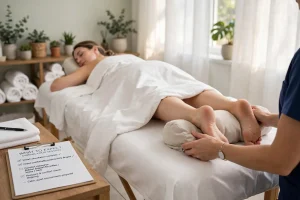
A somatic massage session looks different from a typical massage appointment. The pace is slower. There’s more communication. The therapist may pause during the work and ask you to notice what you’re feeling in your body, not to analyze it, but just to observe.
Some areas of the body that hold tension related to past experiences may feel numb at first, or they may feel more activated than expected. A skilled somatic therapist knows how to work with both responses. They’re not trying to force the body to release anything. They’re creating the conditions where release can happen naturally.
Sessions are typically 60 to 90 minutes. Some clients find that their first few sessions feel subtle, almost like nothing dramatic happened. And then a few days later they notice they’re sleeping better, or reacting differently to stress, or feeling a physical ease they haven’t had in years.
Building Safety in the Body
One of the core goals of somatic massage is building what practitioners call a felt sense of safety in the body. For people whose nervous systems have been in a state of alert for a long time, this is not a small thing. The body needs repeated experiences of being touched safely and responding to that touch without bracing or shutting down.
Over time, this rebuilds the nervous system’s capacity to tolerate sensation, to feel present, and to move through stress without getting stuck in it.
Finding the Right Fit in Lancaster
If you’re in Lancaster and considering somatic massage, the most important thing is finding a therapist who has actual training in this approach. It’s not something every massage therapist offers. Look for someone who works with the nervous system intentionally, who has a background in medical or orthopedic massage, and who understands how to hold space for the kind of work somatic sessions require.
This kind of bodywork requires trust, and finding the right therapist makes all the difference. When the fit is right, somatic massage can open up a level of healing that a lot of clients didn’t think was possible for them.
Ready to feel better? Learn more about our medical massage in Lancaster, PA, or book your appointment online. You can also call or text (717) 725-9670.