
Pregnancy brings back aches, swollen feet, tight hips and restless nights, so it’s no surprise that many expecting moms want a massage. A common question is when it’s okay to start, and whether it’s still okay late in pregnancy. Here’s a simple trimester-by-trimester guide.
The most important rule: check with your OB or midwife before booking, especially if your pregnancy is considered high-risk.
First Trimester (Weeks 1–13)
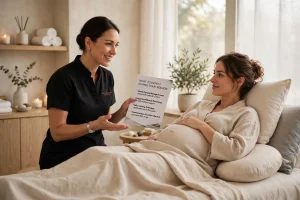
Some practices prefer to wait until the second trimester, and many expecting moms feel tired or nauseated in the early weeks anyway. That said, many healthcare providers consider gentle massage reasonable during a healthy first trimester. If you do book, let your therapist know you’re pregnant so they can adjust positioning and pressure.
Good to know: fatigue and nausea are common. A shorter session may feel better than a long one.
Second Trimester (Weeks 14–27)
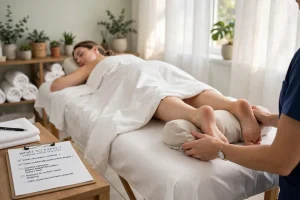
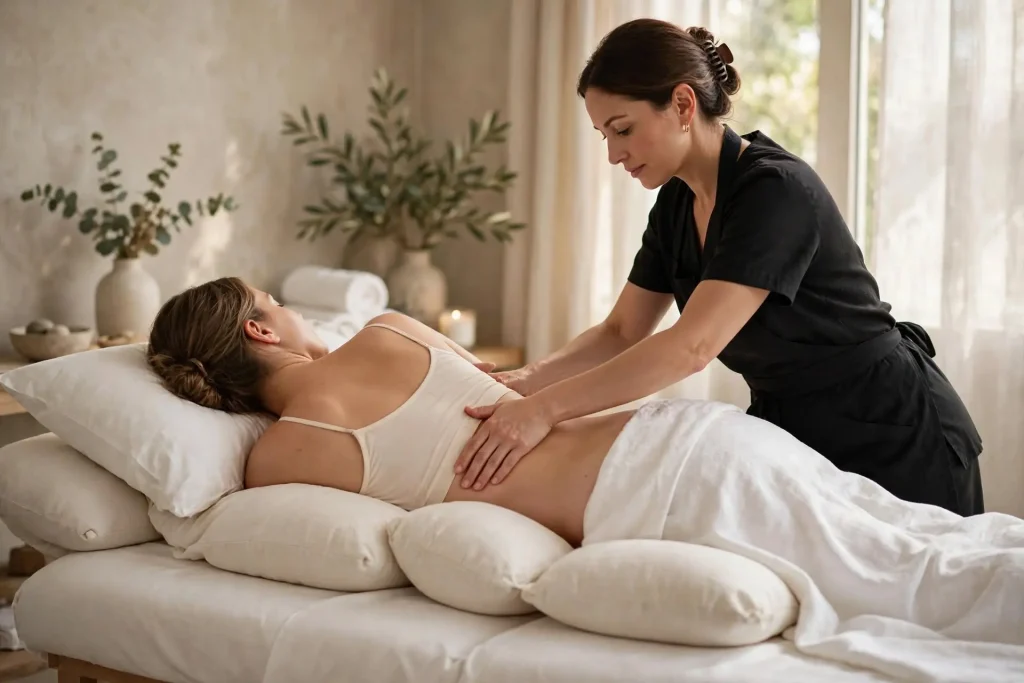
This is when many moms feel their best, and it’s a popular time to start regular prenatal massage. As the belly grows, sessions are done side-lying with pillows supporting your belly, back and knees. Common focus areas include the low back, hips, shoulders and neck.
Third Trimester (Weeks 28–40)
Many moms find massage especially helpful now, when the body is carrying the most weight. Focus often shifts to the hips, glutes, low back and feet. Positioning matters even more: side-lying with plenty of support is the norm, and you can change position or take breaks whenever you need.
Is 37 Weeks (or Later) Too Late?
Not necessarily. Many moms continue massage right up to their due date if their provider agrees. If you have swelling that comes on suddenly, high blood pressure or other new symptoms, contact your provider before your appointment.
When to Check With Your Provider First
- High-risk pregnancy or history of preterm labor
- Preeclampsia or high blood pressure
- Bleeding, placenta concerns or unexplained pain
- A history of blood clots, or new swelling, warmth or pain in one leg
- Gestational diabetes or any condition your provider is monitoring
What Makes Prenatal Massage Different?
- Positioning: side-lying with supportive pillows instead of lying face down.
- Pressure: adjusted for comfort, with extra care around the legs and abdomen.
- Training: therapists trained in prenatal massage know which areas need caution.
At Focused Care, prenatal sessions are offered by licensed therapists including Claudia Ay, who has more than 11 years of experience and specializes in prenatal and therapeutic massage.
Related Reading
- Is prenatal massage safe? What to know before booking
- Why prenatal massage is right for expecting mothers
- Postpartum massage: recovery for new moms
- What to wear to your massage
This article is for general education and is not medical advice. If you have a medical condition, recent injury or surgery, or you are pregnant, check with your healthcare provider before booking a massage.
Book Your Session at Focused Care
Focused Care Therapeutic Massage is located at 274A Granite Run Dr, Lancaster, PA 17601. Learn more about our prenatal massage, book online, or call or text (717) 725-9670.