
Most massage therapists are skilled, caring professionals. Still, it’s smart to know what professional care looks like, especially if you’re new to massage or trying a new place. Here are the signs of a trustworthy practice and the red flags to watch for.
Signs of a Professional Massage Practice
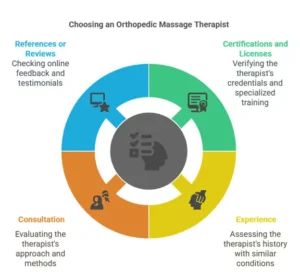
Licensing
In Pennsylvania, massage therapists must be licensed by the State Board of Massage Therapy. A licensed therapist uses “LMT” after their name. You can verify a license through the state’s online licensing system (PALS). At Focused Care, our therapists’ credentials are listed on their profile pages, such as Jean Kark, LMT, NMCT, MMT.
A real intake
A professional therapist asks about your health history, medications, injuries, pregnancy and goals before you get on the table. This isn’t paperwork for its own sake. It helps them choose safe techniques.
Professional draping
You undress to your comfort level in private, and you’re covered with a sheet or blanket throughout. Only the area being worked on is uncovered. Our guide What to Wear to Your Massage explains how draping works.
Clear communication and consent
Your therapist explains what they plan to do, checks in about pressure, and asks before working on sensitive areas such as the glutes, abdomen or chest muscles. You can say no or ask them to stop at any time.
Red Flags to Watch For
- No intake or health questions at all
- Unwillingness to share license information
- Inadequate draping or being asked to undress in front of the therapist
- Ignoring your requests to change pressure or stop
- Working on areas without explaining or asking first
- Pressure that causes sharp pain while being told to “push through it”
- Inappropriate comments or conversation that makes you uncomfortable
- Promises to cure serious medical conditions
- A business with no address, no therapist names and no way to get a receipt
Pressure and Pain: What’s Normal?
Firm pressure can feel intense, but it shouldn’t be sharp, burning or make you hold your breath. Mild soreness for a day or two after a deep session can be normal. Read Is It Normal to Be Sore After a Massage? for details.
How to Speak Up
You’re always in charge of your session. Simple phrases work: “Can you use lighter pressure?”, “Please skip that area,” or “I’d like to stop.” A professional therapist will respond without hesitation.
What to Expect at Focused Care
Every session at Focused Care begins with an intake, includes professional draping and regular check-ins, and is tailored to your goals. New to massage? Start with Your First Massage: A Step-by-Step Guide.
Book Your Session at Focused Care
Focused Care Therapeutic Massage is located at 274A Granite Run Dr, Lancaster, PA 17601. Learn more about our team and approach, book online, or call or text (717) 725-9670.