

When you go to book a massage, the menu can be confusing. Two of the most common options are deep tissue and Swedish (relaxation) massage. Both can feel great, but they’re designed for different goals. Here’s how they compare so you can choose the right one.
What Is Swedish Massage?
Swedish massage is what most people picture when they think of a massage: long, flowing strokes, kneading and gentle circular movements. Pressure is light to moderate. The main goals are relaxation, easing general tension and helping you feel calmer.
Best for: stress relief, first-time clients, people who prefer lighter pressure, or anyone who wants a relaxing hour.
What Is Deep Tissue Massage?
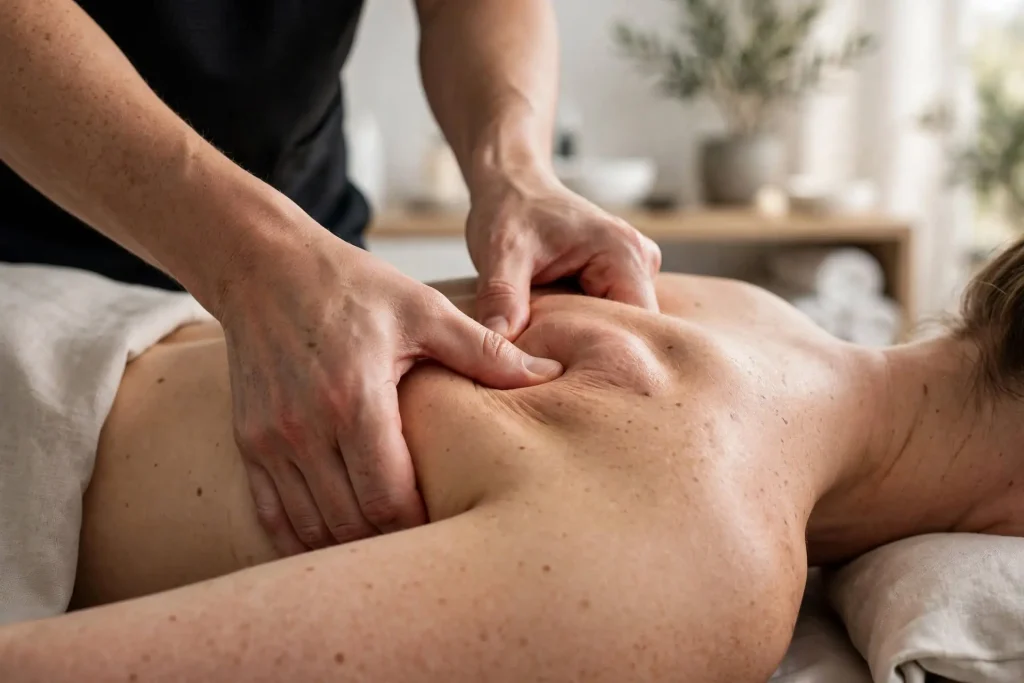
Deep tissue massage uses slower strokes and firm, focused pressure to reach deeper layers of muscle and fascia. Your therapist will often work on specific areas, such as a tight upper trapezius, stubborn knots near the shoulder blade or a sore low back.
Best for: chronic muscle tension, knots, stiffness from desk work or physical jobs, and recovery from training.
Side-by-Side Comparison
| Swedish | Deep Tissue | |
|---|---|---|
| Pressure | Light to moderate | Firm and focused |
| Pace | Flowing, rhythmic | Slower, targeted |
| Main goal | Relaxation and stress relief | Releasing chronic tension and knots |
| Focus | Whole body | Problem areas, plus whole body as needed |
| How you may feel after | Relaxed, a little sleepy | Looser; mild soreness for a day or two is common |
Is Deep Tissue Better Than a Regular Massage?
Not better, just different. Deeper pressure isn’t automatically more effective. If your muscles are guarded or you’re very stressed, firm pressure can make your body tense up. A skilled therapist adjusts pressure to what your tissue can accept, which is why communication matters. For more detail, see our beginner’s guide to deep tissue techniques.
Should Deep Tissue Massage Hurt?
It should feel intense but productive, sometimes called a “good hurt.” It should never feel sharp, burning or make you hold your breath. Tell your therapist right away if pressure is too much. Mild soreness for 24–48 hours afterward can be normal; read Is It Normal to Be Sore After a Massage? to know what to expect.
Can You Combine Them?
Yes, and that’s often the best approach. At Focused Care, our integrative massage sessions start with a short intake. Your therapist may use relaxing Swedish-style strokes to warm up the tissue, then switch to deep tissue work on your problem areas, all in one session.
Which One Should You Book?
- Book Swedish/relaxation if your goal is to de-stress, you’re new to massage, or you prefer lighter pressure.
- Book deep tissue if you have specific knots, chronic tension or tightness from work or workouts.
- Book medical massage if you have an injury, a diagnosed condition or pain that keeps coming back. Our medical massage sessions begin with an assessment to find the source of the problem.
Still not sure? Choose an integrative massage when you book online and mention your goals. Your therapist will tailor the pressure for you.
Frequently Asked Questions
How often should I get a deep tissue massage?
For chronic tension, many people start with sessions every one to two weeks, then space them out. Our guide How Often Should You Get a Massage? explains more.
Who should avoid deep tissue massage?
People with certain conditions, such as blood clotting disorders, recent surgery or fragile bones, may need lighter pressure. Always share your health history during intake.
This article is for general education and is not medical advice. If you have a medical condition, recent injury or surgery, or you are pregnant, check with your healthcare provider before booking a massage.
Book Your Session at Focused Care
Focused Care Therapeutic Massage is located at 274A Granite Run Dr, Lancaster, PA 17601. Learn more about our deep tissue massage, book online, or call or text (717) 725-9670.