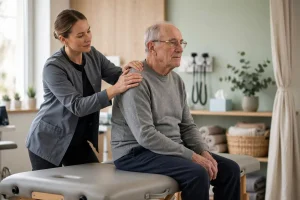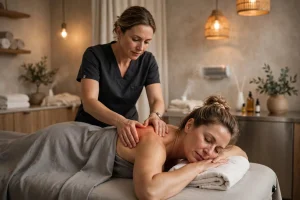


Pain is not all the same. Anyone who has dealt with a sprained ankle knows it feels nothing like the lower back ache that has been there for three years. Those two experiences involve different processes in the body, and they respond to treatment differently, including massage.
Knowing the difference between chronic and acute pain helps you figure out when massage is going to do the most for you and what kind of work actually makes sense for where you are.
What Acute Pain Is
Acute pain is the kind that shows up fast and has a clear cause. You twisted your ankle, pulled a muscle, slept on your neck the wrong way, or overdid it at the gym. The body sends a pain signal to protect the area while it heals.
Acute pain is usually intense, localized, and temporary. It is your body’s alarm system doing its job. The goal in the early stages is not to push through it but to let the tissue begin healing.
When Massage Helps with Acute Pain
In the first 24 to 72 hours after an acute injury, massage directly on the injured area is generally not a good idea. The tissue is inflamed, and adding pressure can make things worse.
But massage around the injury, on surrounding muscles that are guarding and tightening up in response, can be helpful even early on. After the initial inflammation starts to settle down, targeted massage on the area itself can speed up healing by improving circulation and reducing scar tissue formation.
For muscle strains, sports injuries, and post-workout soreness, massage during the recovery window can meaningfully shorten the time it takes to get back to normal.
What Chronic Pain Is
Chronic pain is pain that has been around for more than three months. Sometimes it started with an injury. Sometimes it built up gradually over years. Sometimes there is no single clear cause. Lower back pain, neck pain, tension headaches, fibromyalgia, and pain from conditions like multiple sclerosis or Parkinson’s disease are all examples.
Chronic pain involves changes in how the nervous system processes pain signals. Over time, the body can get stuck in a pattern of heightened sensitivity, where tissue that has technically healed still sends pain signals, or where everyday activities trigger a response that feels out of proportion.
Why Massage Is Particularly Helpful for Chronic Pain
Massage does several things that address chronic pain directly. It reduces tension in the muscles and connective tissue that have been holding compensatory patterns for years. It improves circulation to areas that have been poorly perfused because of that tension. And it works on the nervous system in ways that can lower overall pain sensitivity.
There is also a regulatory effect on the body’s stress response. Chronic pain is often linked to an overactivated stress response, where the body stays in a state of alertness and tension. Massage activates the parasympathetic nervous system, the rest-and-digest side of the equation, and brings the body out of that heightened state.
For people dealing with long-term pain conditions, regular massage tends to have a cumulative effect. One session brings some relief. Ongoing sessions start to shift the underlying patterns.
Where Massage Makes the Biggest Difference
Post-Surgical Recovery
After surgery, the body heals with scar tissue. That scar tissue is functional but tends to be less pliable than healthy tissue, and it can create adhesions that limit movement and cause pain over time.
Medical massage after surgery helps break down those adhesions, restore tissue mobility, and reduce the pain and stiffness that come with them. This is especially common after joint surgeries like knee and shoulder procedures, but it applies across many types of surgery.
Repetitive Strain
This is where massage consistently shines for both chronic and acute presentations. When you do the same movement thousands of times over months and years, the tissue starts to break down. Tendons get irritated. Muscles develop trigger points. Fascia tightens around the area.
Massage addresses all of those layers. It is one of the most effective interventions for conditions like rotator cuff tendinitis, carpal tunnel syndrome, plantar fasciitis, and Achilles tendon issues.
Tension Patterns & Postural Pain
A lot of chronic pain, especially in the neck and back, is not about damage to the tissue itself. It is about how the body has been holding itself over time. Years of desk work, stress, or an old injury that never fully resolved create holding patterns in the muscle and fascia.
Massage works directly on those patterns. A good therapist does an assessment first, looks at how you are holding your body, identifies which muscles are overworking, and targets the session accordingly. Over time, the patterns shift.
Combining Massage with Other Care
For both chronic and acute pain, massage works best as part of a broader approach. Chiropractic care, physical therapy, exercise, and sleep all contribute to how well your body manages pain.
Massage is not a replacement for those things, but it fills a gap that they often leave. It addresses the soft tissue in a way that most other interventions do not.
Getting the Right Timing
The bottom line is that massage works at every stage of pain, but the application looks different depending on where you are. For acute pain, the timing and the approach matter. For chronic pain, consistency and the right technique make the difference.
If you have been dealing with pain, if it has just started or has been with you for years, massage is worth adding to how you address it. The body responds well to hands-on work, and the results tend to be cumulative the longer you stick with it.
Ready to feel better? Learn more about our medical massage in Lancaster, PA, or book your appointment online. You can also call or text (717) 725-9670.