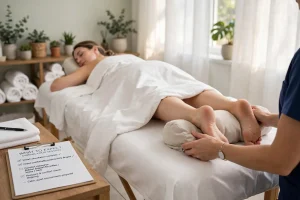


If you have ever been told to drink plenty of water after a massage to “flush out toxins,” you may wonder exactly what toxins are released after massage.
The most accurate answer is that research has not established that massage releases stored toxins from your muscles or detoxifies the body in the way the phrase is commonly used. Massage can affect muscles, connective tissues, the nervous system, circulation, and fluid movement, but that is different from forcing harmful substances out of your tissues.
Normal metabolic byproducts are constantly being produced, transported, reused, and eliminated by the body. Your kidneys, liver, lungs, circulatory system, and lymphatic system all participate in these ongoing processes.
That distinction matters because massage can still have useful effects without needing a “toxin release” explanation.
Does Massage Release Toxins?
There is no well-established list of toxins that massage releases from muscles.
Claims about “massage toxins” often combine several different ideas, including lactate produced during exercise, normal metabolic waste, lymphatic fluid, inflammatory substances, and environmental toxins. These substances are not interchangeable, and research does not show that massage simply squeezes them out of muscles so they can be flushed from the body.
Massage therapy may be used for pain, muscle discomfort, relaxation, rehabilitation, and other purposes, but detoxification should not be treated as an established mechanism or benefit of massage.
So, does massage release toxins? Not in the common “detox” sense.
A more useful question is what massage actually does to the tissues and body systems being treated.
What Actually Happens in Your Body During and After Massage?
Massage applies mechanical pressure and movement to the skin, muscles, fascia, and other soft tissues. Depending on the technique, pressure, treatment area, and individual receiving the massage, those inputs may influence muscle tension, local circulation, pain perception, relaxation, and nervous-system activity.
Research also suggests that massage may influence some cellular processes associated with inflammation and recovery. However, these effects should not automatically be described as “flushing waste” or removing toxins.
Massage does not need to remove toxins to have physiological effects.
Massage and the Lymphatic System
Please note that we do not provide lymphatic massage services.
The lymphatic system is sometimes described as the body’s “detox system,” but that description can be misleading.
One of the lymphatic system’s major functions is collecting excess fluid from tissues and returning it to the bloodstream. Lymph also transports proteins, immune cells, cellular material, and other substances through lymphatic vessels and lymph nodes.
Mechanical movement can influence fluid movement, and specialized techniques such as manual lymphatic drainage have specific clinical applications. That does not mean an ordinary massage pulls unspecified toxins from the body.
The body’s handling of waste is an ongoing physiological process, not something that starts only when tissues are massaged.
What About Metabolic Waste After Massage?
“Metabolic waste” is another phrase frequently used to explain massage detoxification.
Metabolism naturally produces substances as cells use nutrients and generate energy. Examples of substances the body continually manages include carbon dioxide, urea, acids, and other metabolic byproducts.
These materials do not normally sit trapped inside a healthy muscle waiting for a massage therapist to push them out. Blood circulation, lymphatic drainage, the lungs, kidneys, liver, and other systems are continually transporting, processing, recycling, or eliminating substances produced during normal metabolism.
It is more accurate to say that massage interacts with tissues within an already functioning circulatory and lymphatic system than to say that massage “releases metabolic waste.”
Does Massage Release Lactic Acid?
Massage should not be described as a treatment that removes trapped lactic acid from sore muscles.
During intense exercise, the body produces lactate as part of normal energy metabolism. Lactate is not simply a poisonous waste product, and it does not remain trapped in muscles for days.
The familiar belief that lactic acid causes the soreness you experience a day or two after strenuous exercise has also been largely rejected. Delayed-onset muscle soreness, or DOMS, occurs on a different timeline from the temporary elevation in lactate following exercise.
Research examining massage and lactate has also challenged the idea that massage simply “flushes it out.”
This does not mean massage cannot feel beneficial after physical activity. It means lactate removal is not a good explanation for why massage may help someone feel better.
Does Deep Tissue Massage Release More Toxins?
There is no good evidence that deep tissue massage releases more toxins than lighter massage.
Deeper pressure produces a stronger mechanical stimulus to the tissues. Depending on your goals and health history, that may or may not be appropriate. It does not mean deeper pressure is pushing additional toxins into your bloodstream.
More pressure is not automatically more therapeutic.
Deep or vigorous massage can leave some people temporarily sore, particularly when significant pressure is applied to sensitive or previously tense tissues.
The appropriate amount of pressure should be based on the person, treatment goals, comfort, health history, and technique, not on an attempt to release more toxins.
Why Can You Feel Sore or Tired After a Massage?
Feeling different after massage does not prove that toxins have entered your bloodstream.
Some people experience temporary tenderness or soreness after significant soft-tissue work. This may be more noticeable after deeper pressure or work on sensitive and tense areas.
You may also feel deeply relaxed or tired after a session. Massage can be a significant sensory and mechanical experience, and transitioning from a treatment table back to normal activity can take a moment.
If massage leaves you regularly feeling significantly worse, tell your therapist. Treatment intensity or technique may need to be adjusted.
Severe pain, significant swelling, weakness, neurological symptoms, difficulty breathing, or other unusual or persistent symptoms should not simply be dismissed as “detox symptoms.” Seek appropriate medical care when symptoms are concerning.
Can Toxins Released During Massage Make You Sick?
The idea that massage can make you sick because toxins suddenly flood your bloodstream is not supported by established evidence.
Feeling mildly sore after a session can happen. But nausea, headache, dizziness, fatigue, or generally feeling unwell should not automatically be interpreted as proof that massage is successfully detoxifying your body.
There can be many reasons someone feels unwell around the time of a massage, including an unrelated illness, inadequate food or fluid intake, medication effects, sensitivity to heat or positioning, treatment intensity, or an underlying health condition.
Attributing every reaction to “toxins leaving the body” can be unhelpful because it may discourage someone from mentioning symptoms that deserve attention.
Why Do You Need to Drink Water After a Massage?
You do not need to drink excessive amounts of water after massage to flush toxins from your muscles.
Staying normally hydrated is still sensible. If you are thirsty after your appointment, drink water. Hydration supports ordinary physiological functions, but there is no established requirement to force large quantities of water down after a massage specifically to remove toxins.
Think of post-massage water as ordinary hydration rather than a mandatory detox treatment.
Massage Detoxification: Myth vs. What We Actually Know
| Common Claim | More Accurate Explanation |
| Massage releases toxins stored in muscles. | Research has not established that ordinary massage releases stored toxins from healthy muscle tissue. |
| Massage flushes lactic acid out of muscles. | Lactate is part of normal metabolism and is not the cause of typical delayed-onset muscle soreness. |
| Deep tissue massage releases more toxins. | Deeper pressure creates a stronger mechanical stimulus but has not been shown to release greater amounts of toxins. |
| Feeling sore or tired proves toxins are leaving. | Temporary soreness or fatigue can occur for other physiological reasons and is not evidence of detoxification. |
| You must drink lots of water to flush toxins after massage. | Normal hydration is useful, but excessive water intake is not required to “flush” massage-released toxins. |
| Massage has no benefits if detox claims are false. | Massage may still affect pain perception, muscle tension, relaxation, soft tissues, and physiological signaling without working through toxin removal. |
What Massage May Help With Instead of “Detoxing”
Moving beyond the detox explanation allows massage to be discussed in terms of realistic goals.
Depending on your needs, massage may be used for relaxation, muscle tension, temporary pain relief, comfort, mobility, recovery support, or as one component of a broader wellness or rehabilitation plan.
Massage should not be treated as a universal solution, and the most appropriate technique depends on the individual and their goals.
The more useful conversation with your massage therapist is not, “How many toxins will this treatment remove?” but, “What am I trying to improve, and which technique and amount of pressure make sense for that goal?”
Choosing Massage Based on Your Goals
A massage session should be matched to the person receiving it.
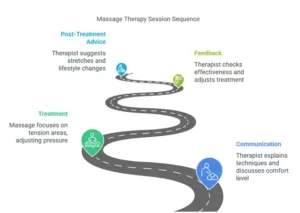
Tell your massage therapist about relevant medical conditions, injuries, recent surgery, medications, pregnancy, areas of unusual pain, and how much pressure feels comfortable.
Certain health conditions or circumstances can affect whether and how massage should be performed, so sharing accurate health information with your therapist is important.
During treatment, more pain does not necessarily mean more benefit. If pressure stops feeling therapeutic, speak up so the technique can be adjusted.
For people exploring massage in Lancaster, PA, Focused Care Therapeutic Massage provides massage services for clients with different comfort, relaxation, and therapeutic goals.
Rather than approaching massage as a way to purge unspecified toxins, consider what you actually want from your session, such as relaxation, addressing muscle tension, improving comfort, or supporting recovery, and discuss those goals with your therapist.
The Bottom Line: What Toxins Are Released After Massage?
No specific group of harmful toxins has been shown to be released from your muscles simply because you receive a massage.
Massage does interact with muscles, soft tissues, the nervous system, circulation, and normal fluid movement. Your body also constantly produces and processes metabolic byproducts. But these facts should not be turned into the unsupported claim that massage “detoxifies” the body by squeezing toxins from muscle tissue.
Lactate is one of the substances most commonly mentioned in massage detox claims, yet it is not a trapped toxin responsible for next-day muscle soreness, and massage should not be presented as a method for flushing it out.
Massage can be valuable without the detox myth. Choosing the right technique, pressure, and treatment goals is far more useful than trying to determine which supposed toxins need to be released.
FAQs
Are toxins really released after a massage?
Not in the way the term is commonly used. There is no established evidence that ordinary massage forces stored environmental toxins or other harmful substances out of healthy muscle tissue. Massage can influence tissues, fluid movement, relaxation, and physiological responses, but those effects are different from detoxification.
What toxins are released after deep tissue massage?
There is no verified list of toxins released specifically by deep tissue massage. Deeper pressure creates more mechanical force on soft tissues, but there is no good evidence that this causes greater toxin release.
Does massage remove lactic acid from muscles?
Massage should not be viewed as a way to flush lactic acid from muscles. Lactate is part of normal metabolism and is not responsible for the delayed muscle soreness that often appears a day or two after unfamiliar or intense exercise.
Does massage release metabolic waste?
Your body continuously produces, transports, processes, and eliminates metabolic byproducts. Massage may interact with circulation and tissue fluid, but describing this as massage “releasing metabolic waste” can imply a detoxification effect that has not been established.
Why am I sore after a massage if it isn’t toxins?
Mechanical pressure on muscles and other soft tissues can leave some people temporarily tender, especially after deeper work or treatment of sensitive areas. Post-massage soreness does not prove toxin release.
Can toxins released during massage make you sick?
There is no good evidence that a flood of toxins released by massage causes people to become sick. Symptoms such as nausea, dizziness, headache, or pronounced weakness have many possible causes and should not automatically be labeled a “detox reaction.”
Do I Have to Drink Water After a Massage?
You should stay normally hydrated, but you do not need to drink excessive amounts of water to flush toxins after massage. Drink according to thirst and any hydration guidance you have received from your healthcare provider.
Ready to feel better? Learn more about our massage services in Lancaster, PA, or book your appointment online. You can also call or text (717) 725-9670.