
Introduction
Whether you are a marathon runner, a CrossFit enthusiast, a high school tennis player, or just someone who hits the gym hard four days a week you consider yourself an athlete. You invest time in training, nutrition, and gear to perform your best.
But are you investing in your recovery?
Many athletes view massage as a luxury or something to do only when they are injured. The reality is that for top performers, massage is not a luxury it is a critical part of training.
At Focused Care Therapeutic Massage, we work with athletes across Lancaster to help them train harder, recover faster, and stay injury free. Here is why incorporating Sports Massage into your routine can take your performance to the next level.
It Is Not Just Deep Tissue
A common misconception is that Sports Massage is just a really painful Deep Tissue massage. While they share some techniques, the goals are different.
- Deep Tissue focuses on chronic pain and breaking down long-term adhesions.
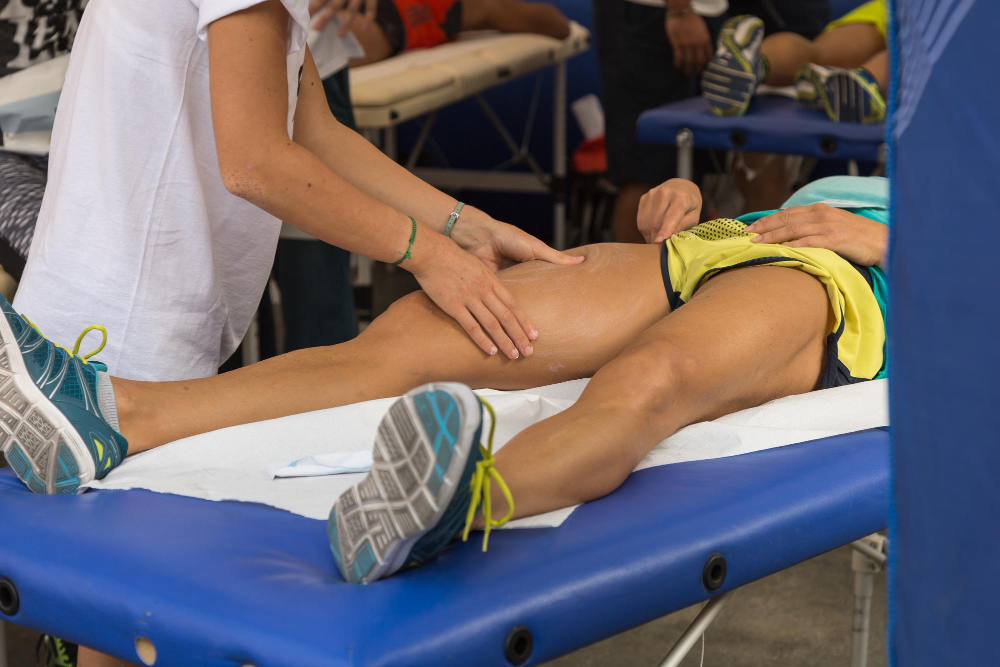
- Sports Massage is systematic and targeted. It focuses on the specific muscle groups you use for your sport (like the calves for runners or shoulders for tennis players). The goal is to improve flexibility, reduce fatigue, and prepare the body for exertion.
The 3 Key Stages of Sports Massage
Timing is everything. Depending on where you are in your training cycle, we adjust our techniques.
1. Maintenance Massage (Training Phase)
This is the most common type. Regular sessions during your training block help keep muscles pliable and address minor niggles before they turn into full-blown injuries.
- Goal: Increase Range of Motion (ROM) and tissue flexibility so you can squat deeper, reach further, and run more efficiently.
2. Pre-Event Massage
Done 24 48 hours before a big race or game.
- Technique: Fast-paced and stimulating. We don’t go too deep (which can leave muscles sore).
- Goal: To wake up the muscles, increase blood flow, and get your nervous system ready to perform.
3. Post-Event Massage (Recovery)
Done after the event (ideally within 72 hours).
- Technique: Slow, flushing strokes.
- Goal: To reduce inflammation, flush out metabolic waste (like lactic acid), and calm the nervous system. This significantly speeds up how fast you can get back to training.
Top Benefits for the Active Body
Injury Prevention
This is the number one reason to book a session. Tight muscles pull on tendons and joints, leading to issues like shin splints, plantar fasciitis, and tendonitis. By keeping muscle fibers loose and aligned, we reduce the strain on your joints.
Improved Flexibility & Power
A tight muscle is a weak muscle. If your hamstrings are tight, they cannot fully extend, which shortens your running stride or limits your kicking power. Massage lengthens the fibers, allowing you to generate maximum force.
Faster Recovery
Intense exercise causes micro-tears in muscle tissue. Massage increases circulation, delivering oxygen and nutrients to these tissues to repair them faster than rest alone.
Real World Examples
- For Runners: We focus heavily on the hips, IT bands, and calves to prevent Runner’s Knee and foot pain.
- For Lifters/CrossFit: We target the upper back (thoracic spine) and shoulders to improve overhead mobility and lifting form.
- For Racket Sports: We treat the forearm and rotator cuff to prevent tennis elbow and shoulder strain.
Conclusion
You push your body to its limit. Give it the support it needs to bounce back. You don’t have to wait until you tear a muscle to see a therapist.
Think of Sports Massage as “maintenance for your machine.” It keeps the gears running smoothly so you can focus on hitting your next PR.
Ready to train smarter? Book your Sports Massage session at Focused Care today.