
Poor posture has a way of creeping up on people. Years of sitting at desks, looking down at phones, and slouching on the couch gradually pull the body out of alignment, and before long the rounded shoulders and forward head feel normal. Fixing posture for good takes more than a reminder to sit up straight, because the problem lives in both the muscles and the way the body has learned to move. Combining Pilates mat work with medical massage addresses both sides of the problem, which is why the pairing works so well. For anyone interested in pilates posture correction in Lancaster PA, this approach offers a path to lasting change.
Why Posture Problems Are So Hard to Fix
Most people who try to fix their posture find that it does not stick. They stand up straight for a while, and then they slip right back into the old slouch within minutes. The reason this happens comes down to how posture problems form in the first place.
The Two Sides of Bad Posture
Bad posture involves two separate problems that feed each other. On one side, certain muscles become tight and shortened from being held in the same position for years, such as the chest and the muscles at the front of the shoulders. On the other side, the muscles that are supposed to hold you upright, including those in the back and the core, become weak and stretched out from not being used properly. The tight muscles pull the body forward, and the weak muscles fail to pull it back, so the body settles into a slouched position.
Why One Approach Alone Falls Short
Because posture problems have two sides, addressing only one of them rarely produces lasting results. Stretching or massaging the tight muscles without strengthening the weak ones means the body has nothing to hold the better position, so it drifts back. Strengthening the weak muscles without releasing the tight ones means you are fighting against tension that keeps pulling you out of alignment. Real posture correction requires dealing with both the tight muscles and the weak ones at the same time.
What Medical Massage Contributes
Medical massage handles the first side of the problem, which is the tight and shortened muscles that pull the body out of alignment.
Releasing the Tight Muscles
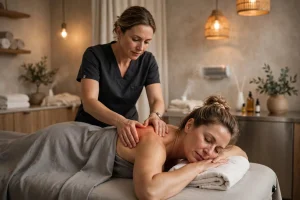
Years of poor posture leave certain muscles locked in a shortened, tight state. Medical massage works directly on these muscles to release the tension and restore their normal length. When the tight chest and shoulder muscles let go, the shoulders are free to move back into a better position instead of being pulled forward. This release creates the room the body needs to hold a more upright posture.
Freeing Up Restricted Movement
Tight muscles and the connective tissue around them can restrict how freely the body moves. Medical massage loosens these restrictions, which allows the joints and muscles to move through a fuller range. This matters for posture because a body that moves freely can hold better alignment more easily than one that is bound up with tension. The massage essentially clears the way so that the strengthening work can take hold.
What Pilates Mat Work Contributes
Pilates mat work handles the second side of the problem, which is the weak muscles that fail to support good posture.
Building the Muscles That Hold You Up
Pilates focuses heavily on the core and the deep muscles that support the spine, which are exactly the muscles that keep the body upright. Mat work builds strength in these muscles through controlled movements that target the areas most responsible for posture. As these muscles grow stronger, they become able to hold the body in proper alignment without constant effort. This strength gives the body something to maintain the better position that massage has made possible.
Training Better Movement Patterns
Pilates does more than build strength, because it also teaches the body to move well. The controlled, precise movements train the body to engage the right muscles at the right time, which retrains the movement patterns that led to poor posture in the first place. Over time, good alignment starts to feel natural rather than forced, because the body has learned a better way to hold and move itself.
Why the Combination Works
Each approach addresses one side of the posture problem, and together they cover the whole issue in a way that neither can achieve alone.
Massage Opens, Pilates Holds
The two methods work in sequence in a way that makes sense. Medical massage releases the tight muscles and opens up the body’s movement, and Pilates then builds the strength to hold the improved position. The massage creates the change, and the Pilates locks it in. When the tight muscles are released and the supporting muscles are strong, the body can finally sit and stand in proper alignment without a constant struggle.
Making the Change Last
Lasting posture correction happens when the body no longer has to fight itself. Once the tight muscles are released and the supporting muscles are strong enough to hold the body up, good posture becomes the default rather than something you have to think about. This is why the combination produces results that hold over time, while a single approach tends to fade. The change lasts because both sides of the problem have been addressed.
For people in Lancaster who want to correct their posture for good, pairing Pilates mat work with medical massage offers a sensible and effective plan. The massage releases the tension that pulls the body out of line, and the Pilates builds the strength that keeps it aligned. Working with a provider who offers both means the two methods can be coordinated to work together. With consistent effort over time, this combination helps the body settle into better posture that holds, rather than slipping back into the old slouch within days.