
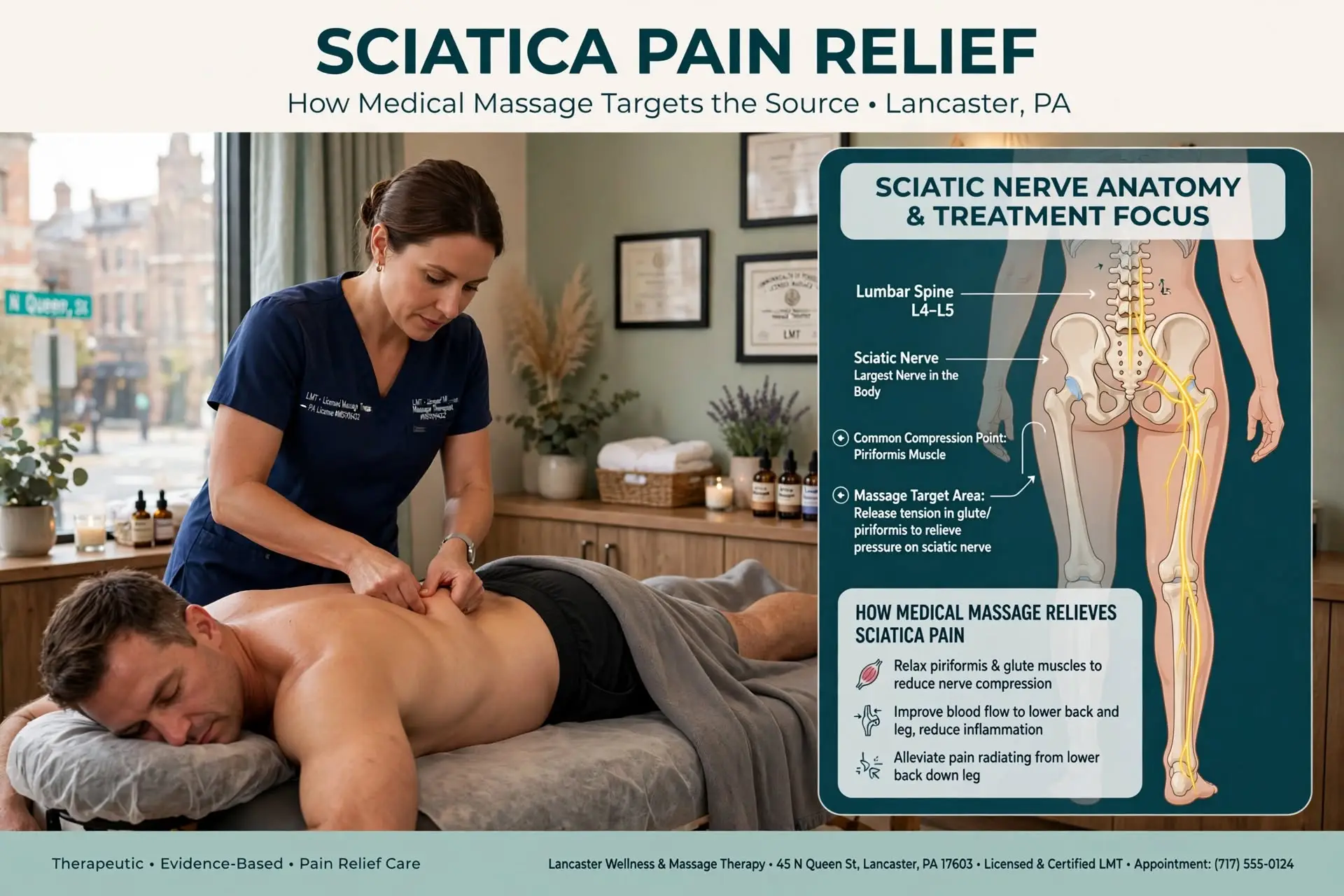
If you have ever felt a sharp, burning pain shoot from your lower back down through your buttock and into your leg, you know how disruptive sciatica can be. Sitting becomes uncomfortable, standing too long is worse, and even sleeping can feel like a negotiation. For many people in Lancaster dealing with this radiating nerve pain, sciatica massage in Lancaster, PA offers a drug-free way to calm the pain by treating the muscles and tissues pressing on the nerve — not just masking the symptoms.
At Focused Care Therapeutic Massage, sciatica is one of the most common complaints we see. Our medical and orthopedic massage approach starts with a thorough intake and assessment so we can find the real source of the compression, then build a treatment plan around your body.
What Sciatica Really Is
Sciatica is not a diagnosis in itself — it is a symptom. It describes pain that travels along the path of the sciatic nerve, the longest nerve in the body, running from the lower spine through each hip and down the back of each leg.
The Sciatic Nerve Pathway
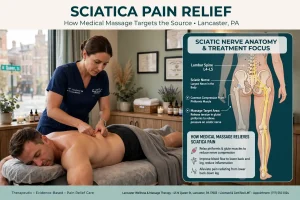
The sciatic nerve is formed by nerve roots exiting the lower lumbar and sacral spine. When any of those roots — or the nerve itself — gets irritated or compressed, pain signals fire along the entire pathway. That is why sciatica rarely stays in one spot: it can feel like a deep ache in the buttock, a burning stripe down the thigh, tingling in the calf, or numbness in the foot.
Common Causes of Sciatica
Two culprits cause most cases we treat. The first is a herniated or bulging disc pressing on a lumbar nerve root. The second — and the one massage helps most directly — is piriformis syndrome, where the piriformis muscle deep in the buttock tightens or spasms around the sciatic nerve. Prolonged sitting, driving, heavy lifting, and even an old hip or back injury can set this off. Many Lancaster clients arrive convinced they have a disc problem when the true driver is muscular compression that targeted bodywork can release.
Why Medication and Rest Often Fall Short
Pain relievers and muscle relaxants can take the edge off a flare-up, but they do nothing to release the tissue that is squeezing the nerve. Extended rest is similarly limited: lying still may calm an acute episode, but inactivity lets the hip and glute muscles stiffen further, which often makes the next flare-up worse. Lasting relief comes from addressing the mechanical problem — tight, adhered, or imbalanced tissue — and that is exactly where therapeutic massage excels.
How Medical Massage Relieves Sciatica
Medical massage differs from a general relaxation session. It is assessment-driven, targeted, and focused on measurable change in how you move and feel.
Releasing the Piriformis and Deep Hip Rotators
Using precise neuromuscular techniques, the therapist works into the deep lateral rotators of the hip to release trigger points and adhesions that compress the sciatic nerve. Because this muscle group sits deep beneath the gluteus maximus, effective work requires the kind of detailed, client-specific bodywork that Focused Care specializes in — not generic pressure.
Improving Circulation to Irritated Tissue
Compressed nerves and guarded muscles suffer from poor local blood flow. Massage increases circulation to the lower back, hips, and legs, delivering oxygen and nutrients while helping flush inflammatory waste products. Better blood flow supports the body’s own healing and often reduces the aching, heavy sensation that accompanies sciatica.
Reducing Protective Muscle Guarding
When the sciatic nerve is irritated, surrounding muscles tighten to “protect” the area — a useful short-term reflex that becomes a long-term problem. This guarding pulls posture out of alignment and creates secondary pain in the lower back, opposite hip, and even the shoulders. Targeted massage interrupts this cycle, teaching the nervous system that it is safe to let go.
Retraining Healthier Movement Patterns
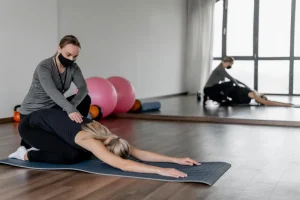
During your intake and assessment, your therapist looks for patterns of dysfunction — a rotated pelvis, a shortened hip flexor, a weak glute — that keep reloading the sciatic nerve. The treatment plan addresses those patterns, and each session ends with relaxing elements so you leave with improved posture, reduced pain, and genuine stress relief.
Calming Nerve Sensitivity Over Time
Chronic sciatica does more than compress the nerve — it can make the entire nervous system more reactive, so that even mild pressure triggers outsized pain. This is called central sensitization, and it is one reason long-standing sciatica can feel worse than the original injury. Consistent therapeutic massage helps reverse this by lowering the nervous system’s threat response. Gentle, repeated work on the affected tissues signals safety to the brain, gradually turning down the volume on pain signals. Clients often notice that flare-ups become less intense and less frequent over a series of sessions, even before the underlying tissue fully releases. This neurological calming effect is one of the least understood — and most valuable — benefits of regular medical massage for nerve-related pain.
What a Sciatica Massage Session Looks Like
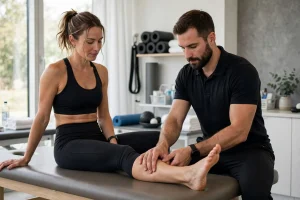
Your first visit begins with a detailed conversation about your symptoms: where the pain travels, what aggravates it, what eases it, and how long it has been going on. Your therapist then assesses your posture and range of motion before and after the session, so progress is visible and measurable.
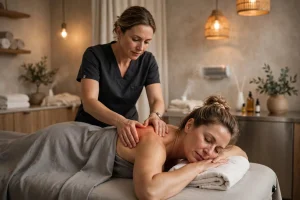
Sessions typically run 60 to 90 minutes and focus on the lower back, hips, glutes, and legs. Hot stones or neuromuscular cupping may be added when appropriate to deepen the release. Pressure is always adjusted to your tolerance — effective sciatica work should feel like productive intensity, never like something you have to endure.
How Many Sessions Will You Need?
Every case is different, but most clients notice meaningful improvement within three to six sessions. Acute flare-ups often calm faster; long-standing patterns built over years of desk work or driving may take a longer series. Your therapist will give you an honest expectation at your first visit and adjust the plan as your body responds.
Frequently Asked Questions
Is massage safe for sciatica?
Yes, when performed by a trained therapeutic massage therapist. Medical massage is a proven rehabilitative approach for sciatica, particularly when the cause is muscular. If your pain follows a recent trauma, involves loss of bladder or bowel control, or is rapidly worsening, see a physician first — those are red flags that need medical evaluation.
Will the massage hurt?
You may feel focused pressure on tender areas, especially in the deep hip muscles, but the work should never feel injurious. Your therapist checks in and adjusts constantly. Many clients describe the sensation as a “good hurt” followed by noticeable relief.
How soon will I feel relief?
Many people feel looser and experience less radiating pain after a single session. Deeper, lasting change usually builds over a short series as the tissues release and movement patterns improve.
Should I combine massage with chiropractic or physical therapy?
Massage pairs well with both. Chiropractic addresses joint alignment, physical therapy builds strength, and medical massage releases the soft-tissue restrictions that keep pulling everything back out of place. Tell your providers about each other so your care stays coordinated.
Find Lasting Relief From Sciatica in Lancaster
You do not have to plan your life around shooting leg pain. With targeted medical massage that addresses the true source of nerve compression, most people get back to sitting, walking, driving, and sleeping comfortably. Call or text Focused Care Therapeutic Massage at (717) 725-9670 to schedule your assessment at our Granite Run Drive studio in Lancaster, PA — and take the first step toward lasting, drug-free sciatica relief.