
If you’ve been dealing with anxiety, you’ve probably already tried a lot of things. Maybe you’ve adjusted your sleep schedule, cut back on caffeine, started a meditation practice, or talked to a therapist. All of those things matter. But a lot of people in Lancaster are now adding something else to that list: vagus nerve massage.
It’s not a trend that came out of nowhere. The science behind it has been building for years, and massage therapists who specialize in orthopedic and medical work have been incorporating it into their practice with solid results. If you’re not sure what the vagus nerve is or why massaging it would help with anxiety, that’s exactly what we’re going to get into here.
What the Vagus Nerve Actually Does
The vagus nerve is the longest nerve in your body. It runs from your brainstem all the way down through your neck, chest, and abdomen, connecting your brain to your heart, lungs, and digestive system. It plays a central role in regulating your body’s response to stress, and it’s the main nerve of your parasympathetic nervous system, which is the part responsible for rest and recovery.
You’ve probably heard of fight or flight. The vagus nerve is essentially the counterweight to that. When it’s functioning well, your body can shift out of stress mode without too much effort. When it’s not functioning well, anxiety tends to linger. You feel on edge even when nothing is actively wrong. Your body stays in a low-grade state of alert.
Scientists measure something called vagal tone to assess how the nerve is performing. Higher vagal tone is linked to better emotional regulation, lower heart rate, and stronger stress resilience. Lower vagal tone is connected to chronic anxiety, inflammation, and difficulty recovering from stressful events. A lot of people walking around Lancaster right now have low vagal tone without knowing it.
How Massage Stimulates the Vagus Nerve
There are specific places in the body where the vagus nerve sits close enough to the surface that manual pressure can reach it. The neck, the area just behind the ear, the upper chest, and the abdomen are all access points. A therapist who knows this anatomy can apply targeted pressure and movement in those areas to stimulate vagal activity.
When this happens, the physiological response is measurable. Heart rate slows. Breathing deepens and becomes more regular. The body shifts away from sympathetic activation and toward a parasympathetic state. Research has shown that certain massage techniques can increase heart rate variability, which is one of the key indicators of vagal tone. It’s not just a feeling. There are real changes happening in how the nervous system is operating.
For people dealing with generalized anxiety, stress-related tension, or a nervous system that just doesn’t seem to settle down, this kind of work addresses the problem at its source.
Why Lancaster Residents Are Paying Attention
Lancaster keeps people busy. Between demanding jobs, family responsibilities, long commutes, and the general pace of life in 2026, chronic stress has become something most people just accept as background noise. But the nervous system doesn’t stay neutral when stress is constant. Over time it recalibrates toward a more activated state, and that’s when anxiety starts to feel like your default mode.
Vagus nerve massage appeals to Lancaster residents because it works on the body directly, not just the mind. Therapy and lifestyle changes are valuable. But when your nervous system is stuck in activation, it can be hard to think or talk your way out of it. Bodywork that engages the vagus nerve gives the system a physical signal that it’s safe to settle down.
What a Session Looks Like
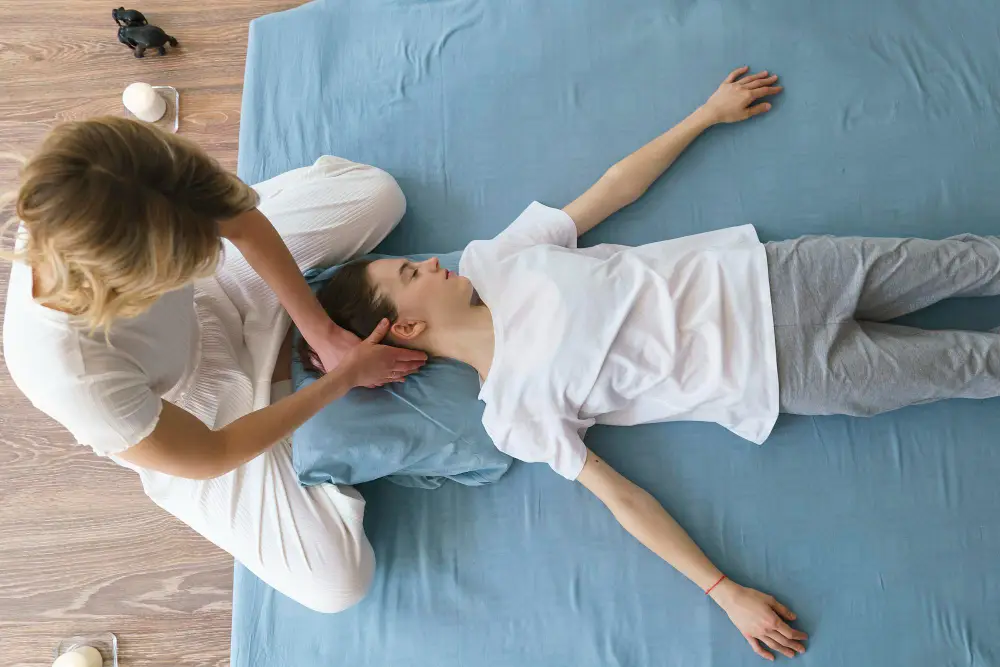
A session focused on vagus nerve stimulation is typically slow and deliberate. The therapist will spend time on the suboccipital region, which is the area at the base of your skull, and along the sides of the neck where the nerve travels. They may also work across the upper chest and, in some cases, apply gentle contact to the abdomen.
This isn’t aggressive work. It’s not the same as a deep tissue session where the goal is to break up muscle adhesions. Vagus nerve work is more about creating sustained, focused contact that gives the nervous system time to respond. Many clients describe feeling their breathing shift during the session, or a sense of release in their chest that they weren’t expecting.
Sessions typically run between 30 and 90 minutes. A lot of therapists integrate vagus nerve techniques into a broader session that also addresses muscular tension, since anxiety and physical tightness tend to go hand in hand.
What Happens Over Time
The effects of a single session are often noticeable right away. Most people leave feeling calmer than when they arrived. Sleep quality often improves in the days following a session. Digestion can also settle, since the vagus nerve has a direct connection to gut function.
With regular work over time, the goal is to raise baseline vagal tone so the nervous system becomes better at self-regulating. It’s less about chasing a single moment of relaxation and more about building the body’s capacity to return to calm on its own.
If anxiety has been affecting your daily life and you haven’t explored what bodywork can do for your nervous system, vagus nerve massage is a solid place to start. For Lancaster residents looking for a grounded, evidence-informed approach, it’s one of the more direct tools available right now.
Looking for relief in Lancaster? See how our medical massage in Lancaster, PA can help, then schedule your session online or call (717) 725-9670.